PracticeEHR
Product design across a US healthcare practice management and EHR platform: patient check-in, OCR intake, CRM, scheduling, and an AI clinical scribe.
- Client
- Sequel Technologies
- Year
- 2025 to now
- Role
- Product design, Design systems, UX research
PracticeEHR is a practice management and electronic health records platform used by clinics across the United States. Its users range from front-desk staff juggling a waiting room to physicians reviewing notes between appointments, and many of its patients are elderly people meeting a touchscreen for the first time.
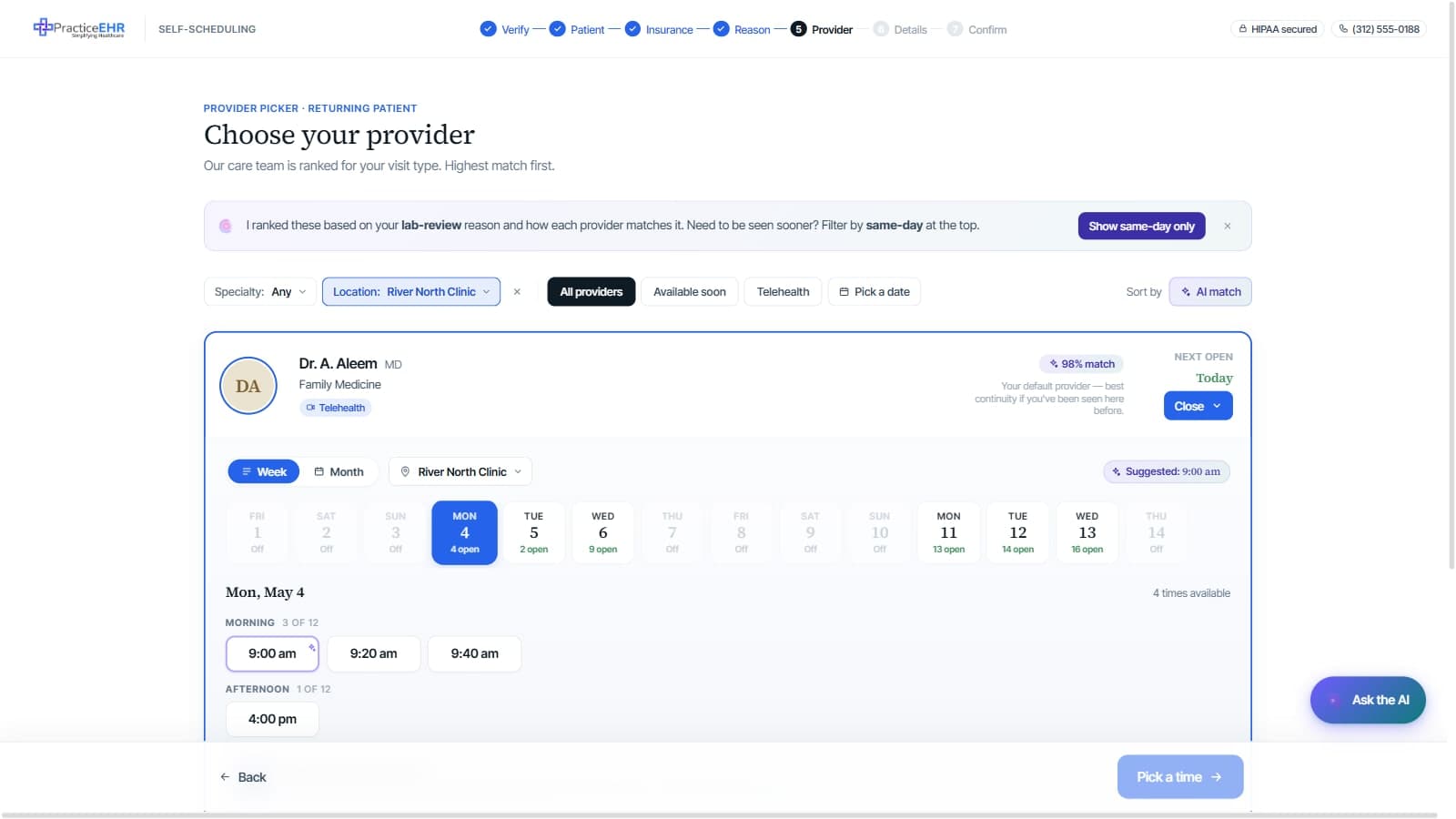
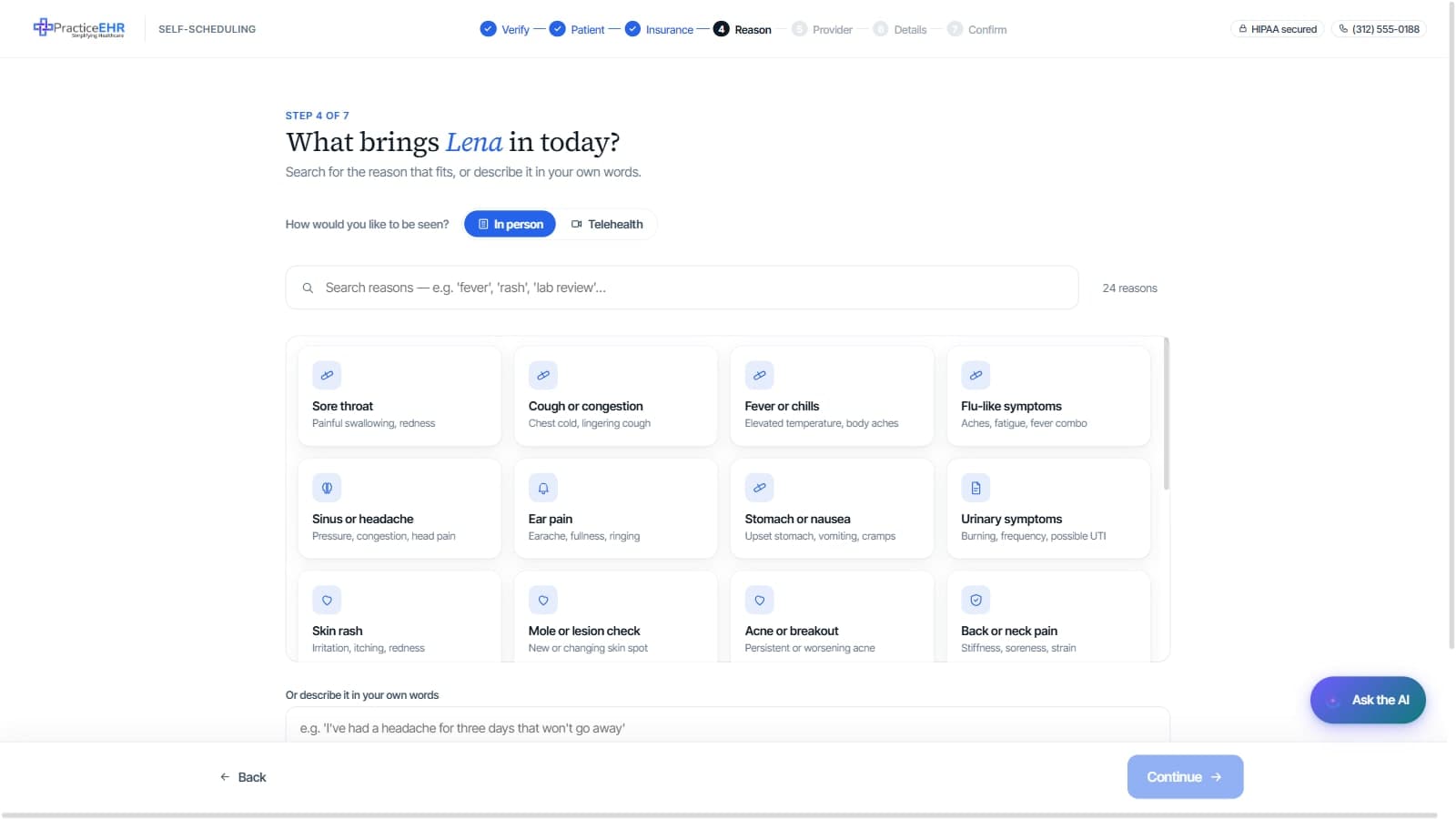
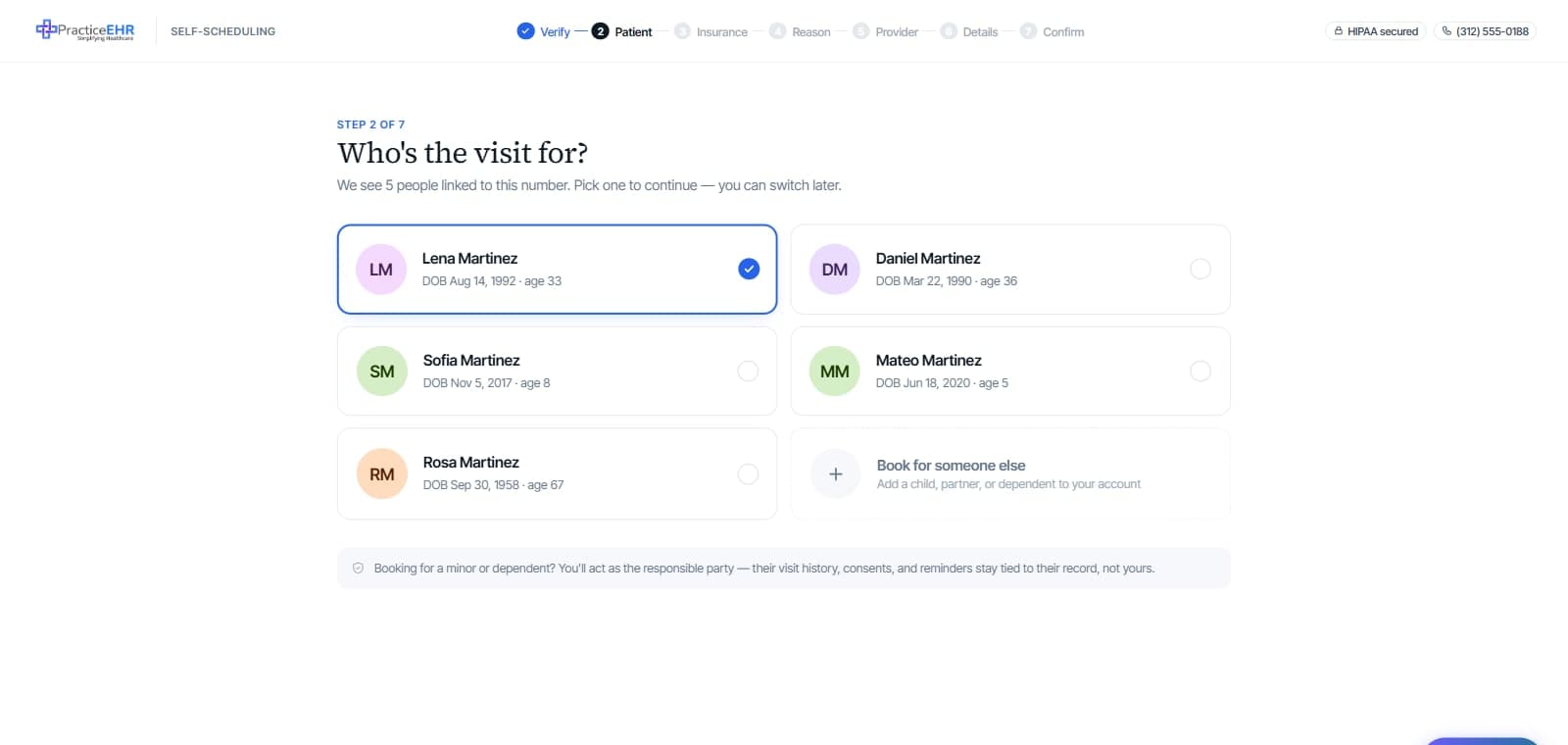
The work spans six product areas, from first patient contact to the reports a practice reads at the end of the month. The screens here are from the patient self-scheduling flow, the public-facing front door someone uses before they ever reach the desk; the internal clinical surfaces are described rather than shown.
Patient self-scheduling, end to end
A returning patient verifies with a phone number and a single SMS code, and the flow recognizes them: it resolves everyone on the account, pulls the insurance already on file, and pre-fills what it can. Then it asks the one thing it cannot know, why they are coming in, as a searchable list of plain-language reasons.
From there an AI ranks the care team by fit for that reason and surfaces the soonest real openings, with a week view and time slots on the same screen. When nothing fits, an AI waitlist takes the patient's availability and books the first matching opening. The whole flow is built to finish on a phone in the minute someone actually has.
A check-in kiosk built for elderly patients
The check-in kiosk runs full screen on a touch device in the waiting room. Its core constraint shaped everything: most patients are older, many have low vision, and none of them came to the clinic to learn an interface.
Instead of a wizard with progress dots, check-in became a single vertical surface a patient can scroll like a paper form. Identity verification, license and insurance capture, demographics, and consent forms live in one continuous pass with large type, generous touch targets, and one clearly labeled action per moment.
OCR intake: the camera fills the form
Manual transcription of driver licenses and insurance cards was the biggest source of intake errors. The redesigned flow asks the patient to photograph both documents, runs computer vision over the images, and auto-fills the demographic and insurance fields for review.
The design problem was trust: patients need to see what the machine read and correct it without re-typing everything. Auto-filled fields are visually distinct, grouped by source document, and editable in place.
Intake flow
- 01Patient photographs license and insurance card
- 02Computer vision extracts fields
- 03Form auto-fills, sources labeled
- 04Patient reviews and corrects in place
- 05Front desk receives structured data
A CRM designed from zero
PracticeEHR had no CRM. I defined the information architecture from the ground up: how practices, providers, and patient relationships are modeled, what a relationship timeline looks like, and which reusable component patterns the rest of the platform could borrow.
The result is a system of list, detail, and timeline patterns that later product areas now reuse instead of reinventing.
Scheduling, the AI scribe, and readable reports
The scheduling redesign centered on the Day Sheet, the screen a front desk lives in. A Wait List with Smart Match recommendations surfaces patients who fit newly opened slots, turning cancellations from lost revenue into filled appointments.
For the AI clinical scribe, which turns visit conversations into structured notes, the design is built around review speed: providers skim, correct, and sign rather than write. And the platform's legacy Power BI reports were rebuilt as modern dashboards a practice manager can read at a glance.